
Platformë për Planifikim të Integruar të Burimeve dhe Sistemit
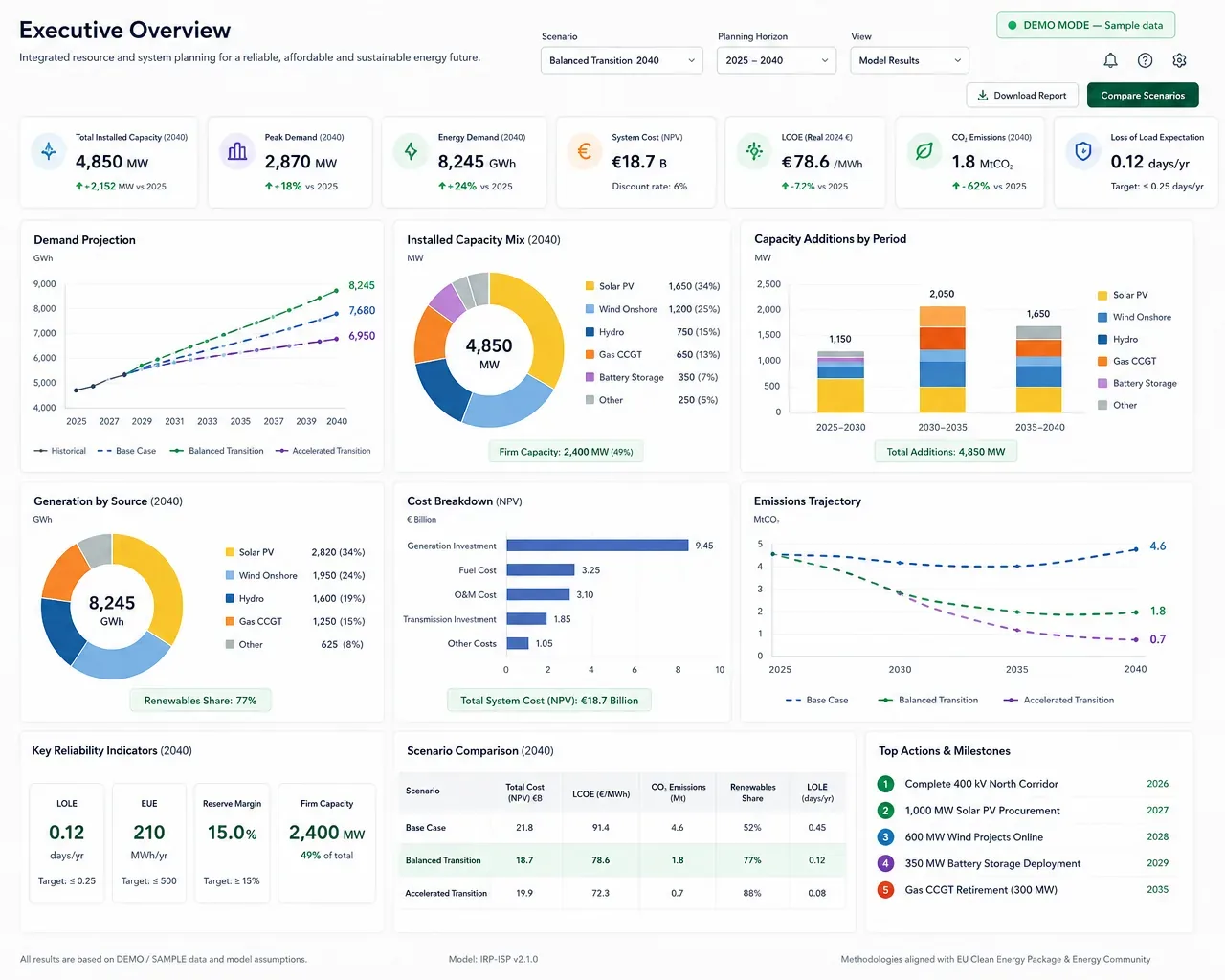
Ndërton rrugë zgjerimi kapaciteti me kosto më të ulët përgjatë prodhimit, ruajtjes dhe burimeve të anës së kërkesës, dhe pastaj i raporton në tri format në të cilat udhëton realisht një vendim planifikimi: një përmbledhje ekzekutive, një analizë politikash dhe fletoren e punës që qëndron poshtë tyre.
Si duket
Vendimi që mbështetet
Cilat burime të ndërtohen, në çfarë radhe, dhe nëse një objektiv i shpallur është i realizueshëm nga sistemi që duhet ta mbajë.
Përdoruesi i synuar
Operatorë, TSO dhe DSO, ministri dhe rregullatorë, si dhe programe donatorësh që porosisin studime planifikimi afatgjatë.
Çfarë hyn, çfarë del
- Kërkesa historike dhe e projektuar
- Flota ekzistuese e prodhimit me parametra teknikë dhe kostoje
- Trajektore të çmimeve të karburantit dhe karbonit
- Kufizime rrjeti ose radha e lidhjeve në çfarëdo rezolucioni që ekziston
- Objektiva politikash dhe standarde besueshmërie që plani duhet të plotësojë
Platformë për Planifikim të Integruar të Burimeve dhe Sistemit
- Rrugë zgjerimi me kosto më të ulët sipas teknologjisë dhe vitit
- Krahasim skenarësh nën pasiguri të kërkesës, çmimit të karburantit dhe politikave
- Vlerësim i mjaftueshmërisë së burimeve kundrejt standardit të zbatueshëm
- Përmbledhje ekzekutive, analizë politikash dhe fletore e plotë pune nga i njëjti ekzekutim
Çfarë hyn dhe çfarë del. Vetë modeli — formulat, peshimi dhe logjika e optimizimit — është metodë dhe jo dëshmi, dhe nuk vizatohet këtu.
Përmbledhje e metodologjisë
Zgjerim kapaciteti i bazuar në skenarë. Çdo ekzekutim emërtohet dhe versionohet, dhe çdo shifër e publikuar gjurmohet te një ekzekutim i caktuar dhe jo te një tabelë që dikush e redaktoi më pas — që është ajo çka e bën një rezultat të mbrojtshëm para një rregullatori muaj më vonë.
Kufizimet
- Rezultatet janë vetëm aq të mira sa paraqitja e rrjetit që u dorëzua; aty ku një radhë lidhjesh nuk ekziston në formë të përdorshme, kufizimet e rrjetit përafrohen dhe supozimi deklarohet.
- Optimizimi me kosto më të ulët pasqyron kostot dhe kufizimet e vendosura. Nuk e çmon fizibilitetin politik, kapacitetin e prokurimit apo gatishmërinë institucionale — ato vlerësohen veçmas dhe qëllimisht jashtë modelit.
- Nuk është mjet operimi apo dispeçimi në kohë reale. U përgjigjet pyetjeve në horizont investimi, jo çfarë të operohet nesër.
Pamje publike
Modeli i qasjes
I zbatuar brenda një angazhimi. Klienti e mban modelin dhe dokumentacionin që ekipi i tij ta ri-ekzekutojë pasi ne largohemi — një model që askush nuk mund ta ri-ekzekutojë është dorëzim, jo kapacitet.